Overview
In this experiential learning activity, students explore the role of social workers in connecting individuals—especially youth—to essential community supports. Working in small groups, students research local organizations and services that provide assistance in areas such as housing, mental health, mentoring, food security, and youth employment.
NB Curricular Connections
Civics 10
- Strand: Civics – Big Idea: Human Rights [active exploration] Skill Descriptor: Research Human rights legislation
- Strand: Civics – Big Idea: Citizenship and Belonging – Skill Descriptor: Investigate community and online spaced that respond to issues of belonging.
Sociology 12
- Strand: Humanities – Big Idea: Socialization, Skill Descriptor: Discuss the role socialization plays in human development
- Strand: Humanities – Big Idea: Social Inequalities – Skill Descriptor: Explore how the concepts of race, sec and gender and economic structure operate in our lives and of others.
English Language Arts Foundational 10
- Strand: Interactions- Big Idea: Expression, Skill Descriptor: Construct and communicate an awareness of self, others, and the world.
- Strand: Reading Big Idea: Reading Comprehension: Skill Descriptor: Construct meaning from a variety of text considering the source, intended audience, and purpose.
What You’ll Need
- Access to technology- Ipads or computer with Canva or other design application.
- Access to COE Health speaking series videos. Included in instructions below.
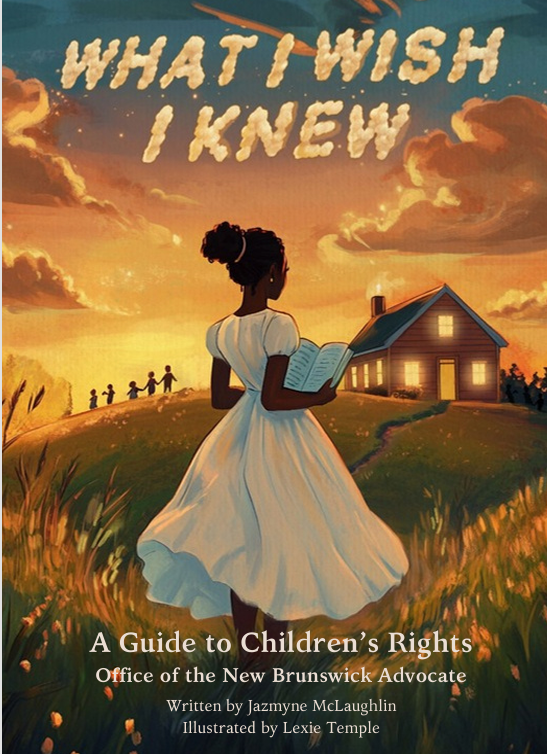
- Book- “What I Wish I knew” by Jazmyne McLaughlin – Please see PDF attached
-
Materials to construct map if desired.
Instructions
- Learners watch the COE Health video and learn more about the rewarding role of a Social Worker. Learn more about a rewarding Social Work career with NBASW | Centre of Excellence for Health
- Learners will complete a graphic question template while watching the video to ensure they are engaged and can gather information and discover what social workers actually do in our communities. Please see template attached.
- Learners read the book- “What I wish I knew” individually. Please see PDF attached.
- In small groups, learners discuss each of these rights (or jigsaw and divide rights into 2 or 3 per group) and what services in our community might be attached to them. For example, ‘you have the right to live in a safe place’. What services in the community would help support this right? Who can contact them? What is the process to access them? Etc.
- Once familiar with the different rights and affected services, learners are tasked with creating a visual “resource map” (digital or poster-based) that highlights available supports in their community, including contact details, eligibility criteria, and types of services offered. They may choose to organize their map by category (e.g., housing, wellness, education, employment) or by the age group served.
Extension ideas/UDL options
1.Guest Speaker or Panel Discussion
Invite social workers, community outreach coordinators, or youth mentors to talk about their roles, the challenges they face, and how they connect clients to resources.
➡ Task: Students prepare questions ahead of time and write a brief summary or reflection after the session.
- Community Walk / Field Study
Organize a walking tour (or virtual tour) of community services such as food banks, youth centres, or shelters.
➡ Task: Students document observations and note how each service addresses social determinants of health (housing, mental health, employment, etc.).
- Case Study Challenge
Provide students with fictional youth “profiles” facing specific challenges (e.g., housing insecurity, isolation, mental health concerns).
➡ Task: Using their resource map, students create a short action plan showing which supports a social worker might connect the youth to and why.
- Digital Story or Infographic
Students transform their research into a short video or infographic explaining what resources exist for youth in their area and why community connections matter.
➡ Task: Share the finished pieces on a class website or with local community partners.
- Community Partnerships Project
Students contact one local organization to learn more about its programs and impact.
➡ Task: Create a short profile (poster, brochure, or blog post) summarizing the organization’s mission and how it supports young people.
- Empathy in Action Journal
Over the course of the project, students keep a brief journal about what surprised them most about community needs and how their perception of social work changed.
➡ Task: Include one final entry on how they might contribute to their own community.
Global Competencies
- Collaboration
- Critical thinking and Problem-solving
- Self-Awareness and Self-management
- Innovation, creativity, and Entrepreneurship.
Acknowledgements (if needed)